Stop 1 · Gate 1 · chapter 1 of the Atlas
The island that rises to the surface
Glastonbury Tor / Shaftesbury · England
You can begin getting to know the grid right from the place where you live. The planet keeps its shape not by chance. Where the stresses of the crust converge into a node, the same thing has arisen for centuries: a temple, a mountain, a spring, a city — and people who go there for one and the same thing. These are the nodes of the crystalline body of the Earth, and the road through them is a great laboratory of consciousness: the network of nodes is a calculated model, and it can be checked by comparable records of those who have been on the spot — time, conditions, observation.
We have gathered such points into one registry — 156 nodes, 146 of them with a coordinate verified against a source — and laid them on a map you can turn with your finger. Tap any point: you will see which node of the grid it belongs to, what its element and note are, and which eight stations run inside it. The easiest way to begin is with the one nearest to you.
The map of the grid leads to the fifth step: the node you come to is part of one network of places, and at that moment you are part of it too.
All five steps of the path — in the author’s concept.
In the language of science, the frame of the planet is a network of lines in its solid shell. The crust is broken into plates; their boundaries, deep faults and mid-ocean ridges add up to a connected network, and earthquakes are concentrated along it. In the model a node is a place where such lines should converge. The geometry of the grid is a model that names in advance where the nodes should lie; catalogues of active faults and earthquakes and maps of magnetic anomalies are what it is checked against. The whole planet together with the ionosphere sounds like a cavity with its own note of about 7.83 hertz. Kovalev Mineral is grown in a high-frequency electromagnetic environment — at a point where electromagnetic paths cross.
Not a globe with a map of countries and not a “grid by eye”. Three layers, each with its own mathematics: Goncharov’s skeleton — the 62 nodes of the disdyakis triacontahedron; the fractal field — the 162 nodes of a geodesic of frequency v=4; the living points — 156 real places: Giza, Kailash, Uluru, Baikal. The coordinates are calculated by a generator in the code, not by a list typed by hand.
The whole series you have walked, not only your own node, is gathered by the section “My path” in your account: the nodes you have stood on, the stations of the octave and your notes on them.
The nearest node is calculated right in the browser: the coordinates stay in this tab and go nowhere. The frame itself is not drawn by eye either — its points are calculated by a generator in the page’s code.
The Earth’s frame is held by 62 nodes; a crystal lattice is assembled from incomparably smaller and more frequent points. One and the same task is solved on different floors — in the cell and in the planet: how to lay out points so that the form holds. Hence the similarity of the patterns, and not from coincidence.
The number 62 is the vertices of the disdyakis triacontahedron; it is calculated by the generator in the code of this page, not taken from memory. This is a calculation, not a measurement.
Each element has its own page: Earth · Water · Fire · Air · Ether.
Where this leads
A node is one point of the grid. The next question is what connects you with the whole
The grid gathers places into one network, and when you come to a node, at that moment you are part of it too. The fifth step no longer asks about a place but about connection: what joins you with all that exists.
The globe shows half the planet at a time. Here you can see everything at once: 52 Gates, each with three points, and the colour of a point is its phase. Tap a point — you will find out what place it is and open it on the globe.
Choose a structure — you will see on which node of the grid it stands, in which books it is analysed and where to open its whole passport.
In English
The planet is a living system. Its grid rests on 52 primary Gates — places where a region gathers and holds its own pattern.
Each Gate opens in three phases:
52 Gates × 3 phases give the 156 Portals on this map. Some of them stretch for hundreds or even thousands of kilometres, linking continents, cultures and civilisations.
The Gates widen and narrow with the great cycles of the Earth — the Aeons. The journey along them is made with the Kovalev Mineral, the material centre of this direction.
Everything here is connected: the place, the cycle and the person who comes to it.
The map is not there to be looked at. Four steps — and a point turns from a glowing pixel into a place you really travel to.
156 living points. Each has an element, Gates, a role in the triad and a coordinate by which it can be found on any map of the world.
The eight stations of the point: what to do on arrival, where the peak sounds, how to finish. Not “stand and feel” but an order.
The nodes are connected into triads and cycles — these are ready-made threads of routes. The sacred journeys go along them together with guidance.
At the fifth station the Crystal Guide is with you. The Mineral does not replace the road; it holds the tuning while you walk.
The Mineral is a condition of participation, not a souvenir for the trip. The Sacred Journey is not walked without it: the tuning is held by it the whole way. This is how it has been arranged from the very beginning, and we say so at once, not at the threshold.
A crystal is an archive. Pressure, temperature, the composition of the solution, the rate of growth, impurities — all this is recorded in it for ever: in the zoning of its layers, its inclusions, its isotopic signature. A geologist takes a stone and reads from it the conditions that no one saw: what the environment was, how it changed, how long it lasted. 🟢
A stone is recorded time.
And here is the hypothesis we put forward openly: at the nodes of the grid conditions come together in such a way that matter records the rhythm of the Earth itself. In this we are interested in one thing: what aligns with one another things that are not directly connected. The question has been put, the course of the check has been named, the answer is open — and we are looking for it.
If the Planet is the Mother, then the Mineral is her son. A guide of people to the Mother, to nature. Not a product and not an amulet: what she gives to a person so that they find the way back — to her, to nature, to their own rhythm.
Not “buy a stone” but “the stone will show the way home”.
Scroll down — and the planet turns from node to node. Each stop has a chapter of the Atlas about the place and the planet itself with the path travelled; below is a “where we are” line: coordinate, Gates, phase. The stops are the inspiring points of the first eight Gates, in the order of the chapters of the Atlas.
Stop 1 · Gate 1 · chapter 1 of the Atlas
Glastonbury Tor / Shaftesbury · England
Stop 2 · Gate 2 · chapter 4 of the Atlas
Sun Is. (Isla del Sol), Lake Titicaca · Bolivia/Peru.
Stop 3 · Gate 3 · chapter 7 of the Atlas
Uluru and Kata Tjuta · Australia
Stop 4 · Gate 4 · chapter 10 of the Atlas
Tirta Empul, Bali · Indonesia
Stop 5 · Gate 5 · chapter 13 of the Atlas
Mount Kailash, Tibet · China
Stop 6 · Gate 6 · chapter 16 of the Atlas
Mount Shasta, California · USA
Stop 7 · Gate 7 · chapter 19 of the Atlas
Palenque / El Tule · Mexico
Stop 8 · Gate 8 · chapter 22 of the Atlas
Mount Fuji · Japan
We are used to saying “the environment”. Those words already contain a view from outside: the environment is what is around. A background. A stage set moved out to the edges of our life. Turn it over for a minute.
Beneath you are eight thousand kilometres of matter that does not rest for a second. At the very heart, under a pressure of three and a half million atmospheres, lies a ball of iron the size of the Moon. It is solid — and it is a crystal: seismic waves pass through it at different speeds in different directions, which means the atoms there are lined up and ordered. 🟢
The planet literally has a crystalline heart.
Around it flows the molten core — slowly, in vortices. This movement gives birth to currents, the currents give birth to a magnetic field, and the field reaches tens of thousands of kilometres into space and takes on itself the solar wind, which would otherwise strip the Earth of its atmosphere. 🟢 We live inside a shield that the planet generates from within itself. Every second. Four billion years in a row.
This is not a background. It is work.
Go through this section once more, from the bottom up: the crystalline iron of the heart, the melt around it, the stone of the crust, the ocean, the air and the field reaching out into space. These are not six worlds laid one on top of another but one fabric taken at different densities— from the most ordered to the most rarefied. The support for this picture lies in physics: the mass of a body is a measure of the energy it holds within itself, and matter is energy that has been given a form. 🟢
A human being is the same fabric: a form that is able to notice itself.
A proton is about a hundred times heavier than the quarks it is made of: the masses of the quarks are of the order of a few megaelectronvolts, the mass of a proton is about 938 megaelectronvolts. The difference is held by binding energy — the energy of the motion of the quarks and of the field that keeps them inside protons and neutrons. Hence about ninety-nine per cent of the mass of ordinary matter — both of the iron in the heart of the planet and of your body — falls not on the particles themselves but on what holds them. This is a calculation from the measured masses of the particles, not our own measurement.
And that is why there is a different Main Hero here. On the platform as a whole the guide is Kovalev Mineral; on the Planet page the Main Hero is the Planet itself: a living, intelligent organism, a liquid crystal, with a crystal lattice of 156 nodes. Everything below is about her.

Before you tap the points — a short excursion. We keep two things separate: what has been measured by instruments and what the author’s picture of the world proposes. Mixing them would be dishonest.
Between the surface and the ionosphere stand electromagnetic Schumann resonances — the fundamental mode is about 7.83 Hz. Quartz and other minerals produce the piezoelectric effect: under mechanical stress a charge appears on the faces. The planet is surrounded by a geomagnetic field with poles and anomalies. Tesla thought of the Earth as a resonator.
Everything listed is ordinary physics; it can be checked. Neither “156 points” nor “a network of nodes” follows from it.
The author’s picture reads the planet as a structured body: a node is an attractor of order: a place where form holds more stably than around it. 52 Gates of three points each give 156 nodes; each triad is the inspiring, the structural and the creative facet of one Gate.
This is an invitation to explore. The places themselves are real and verifiable; the connection between them is a model of the Institute. The instruction to the Traveller is simple: choose a node, read its story, get to it — and see with your own eyes.
And right beside it is a count that did not confirm this model. We took six well-known sacred places from an external list, announced the threshold in advance and calculated the angles between them: zero hits out of fifteen. The numbers, the script and a way to recalculate it yourself are on the page Open Count.
Beneath the mantle sit two superplumes — giant regions of a different composition and seismic wave speed: the Pacific and the African LLVP. This is generally accepted geophysics, and it says a simple thing: inside, the planet is not uniform, and heat goes out not in an even layer but in clusters.
Quartz and feldspars make up about 60% of the Earth’s crust — that is, the crust under tectonic stress is literally a piezoelectric medium. Telluric currents are real earth currents; they are measured with instruments.
Our path begins here: the currents are real and measurable, while how they lie along the ley lines is an open question, and the Institute keeps its own map on it.
The physicist E. Borozdin searched for regularities in the distribution of atmospheric phenomena in space images. Having looked through several thousand frames from the “Meteor” weather satellites, he came to the conclusion that the places where cyclones and anticyclones originate — they are easy to identify by the pattern of the clouds — are distributed not at random and form a network that coincides well with the vertices of the system.
His explanation: the source of the influence lies not in the crust but deeper — in the mantle. The heat of the interior leaves in short pushes — through “short-lived sub-crustal local disturbances”.
Why we keep this as a separate card: in the whole IDSE material this is the only fragment where there is a method, a volume of data and a verifiable claim. If the grid is mentioned seriously at all, it is this that should be quoted. This regularity has not passed a modern statistical check.
This is how the author described it — the book “The Quantum Transition”, ch. 3 “The Alchemy of Transitions” — it is on the platform’s shelf. The Earth is now in a phase of transition from the rigid cubic matrix of the past (material fixation) to the higher dodecahedral synthesis, and the icosahedral structures of the hydrosphere and plasma serve in this as the working instrument of restructuring. The icosahedron here is not behind but in hand: not a step that has been passed, but what the restructuring is done with.
Where the different chain on this page comes from. The frame on the globe above is built according to the IDSE theory, and in it the central solid crystalline body of the planet has gone through almost a two-billion-year path of evolution of form: from the tetrahedral to the icosahedral, and now it is going through the initial stage of crystallisation of the dodecahedron. We do not remove it and do not adjust it to the book: it is a separate source (Goncharov, Makarov, Morozov), and there the icosahedron really is a step. The two descriptions converge at the point of destination — the dodecahedron — and diverge on where the path comes from and what it is made with. We name the divergence out loud and do not smooth it over; the frame on the globe is a “frame” of the path, not an eternal blueprint.
The geocrystal is described by the authors as the engine of the planet’s processes: it does not simply form the shells of the Earth but structures them in its own likeness. And the phrase that is key for us: the processes of its growth differ from ordinary crystal formation only in scale.
Hence the through-line of the page: the planet and the mineral grow by one physics — the difference is in size, not in the nature of the process. This is the concept of the IDSE authors.
A crystal is not about beauty. It is about order: a substance in which the elements are lined up into a stable, repeating structure. By this sign the Earth is crystalline on three levels at once.
This can only be checked on yourself: see what changes in you if you look this way.
The frame can not only be turned but also recalculated. Not a single number below has been written in by hand: the page calculates them on loading — from the formulas of the polyhedra and from the same coordinates by which the points stand on the globe. If the result is inconvenient, we print it all the same.
12 vertices of the icosahedron + 20 vertices of the dodecahedron (they are also the centres of the icosahedron’s faces) + 30 midpoints of edges. The solid is the disdyakis triacontahedron. Orientation of the frame: a vertex at the North Pole, two rings of five vertices at latitudes ±arctan ½, unrolled in longitude from 31.2° E.
“The second order” = two divisions in half, that is, a triangulation frequency of v = 4 (not 2: v=2 gives 42 nodes — this is a mistake that is easy to make). The page unfolds the series of geodesic classes itself:
Exactly 156 does not fall out of a pure division of the frame — there is no such theorem, and we do not invent one. 156 is the registry of 52 Gates × 3 phases (Inspiring · Structural · Creative), which lies as Windows of Resonance on the strict geometric matrix.
The model requires each living point to lie at a vertex or on an edge of the grid, and not to “hang in the air”. This can only be checked by measurement — and it is in front of you. The page takes all the living points with coordinates and for each calculates the angular distance to the nearest node of the v=4 matrix and to its nearest edge, and alongside — a control value: the same for points scattered evenly over the sphere (a deterministic Fibonacci spiral, without random numbers).
This is how it reads. Not a single point “hangs in the air”: each lies inside a cell of the matrix, and all of them are closer than 5° to its force line. The control line shows the other side too: the same closeness to the edges is given by the density of the grid itself, while the median distance to a node is far from zero. If 156 were derived by dividing the frame, it would be close to zero. That means the origin of the number has been named correctly: 156 is the registry of 52×3 laid by the Windows of Resonance on the matrix, not a consequence of its division. A number the reader can recalculate is more honest than a sentence they have to believe.
Goncharov came to geometry not from physics: he noticed a regularity in the distances between the centres of ancient cultures and determined a module of ≈ 3,500 km. Giza → Mohenjo-daro is one module; a doubled module is Mohenjo-daro → the North Pole and Easter Island → the South; these two civilisations themselves lie at the ends of one axis passing through the centre of the Earth. Below is not “≈3,500” out of thin air but great-circle arcs calculated by the page (R = 6,371 km). The coordinates of Giza and Rapa Nui are taken from the same registry as the points on the globe.
🟡 The regularity itself is a hypothesis that has not passed a modern statistical check. 🟢 Only one thing is verifiable here — the arithmetic of the distances, and it is before your eyes.
Switch on the toggle “Antipodal axis” above the globe and tap any node — a chord will pass through the body of the planet to its antipode, and the card will show the coordinates of the opposite point and the living node nearest to it. A pair of nodes reads as communicating vessels.
The Western line of development of the same model is Becker–Hagens: the tetrahedron, the octahedron and the rhombicuboctahedron are added to the icosahedron and dodecahedron, and the sphere is ruled into 120 triangles. The toggle «UVG-120» completes the full triangulation of our own skeleton — the same 62 nodes, without a single new point.
I type — the maximum of tectonic and electromagnetic stress (the vertices of the icosahedron). D type — the centres of faces: troughs, depressions, centres of cyclonic systems (the vertices of the dodecahedron). E type — connecting: vectors of migrations and faults (the midpoints of edges).
The strongest thing in this story is that the starting point was not physics.
N. F. Goncharov was an art historian. He noticed that the symbolism of the equilateral triangle is found everywhere, starting from the Palaeolithic: ceramics, crafts, architecture, mythology, the attributes of power — and that the sources contain references to territorial divisions of a triangular form. The peaks of such information fell on the centres of ancient cultures.
Then came arithmetic: he noticed a regularity in the distances between the centres and derived the module ≈ 3,500 km. The electronics engineer V. A. Makarov formalised the inscribing of the Platonic solids, the mechanical engineer V. S. Morozov added a systems analysis of anomalies. So the hypothesis “the Earth is a growing crystal” received a geometry — from the distribution of human culture over the planet, not from geophysics.
Why are the centres of independent ancient civilisations located on the surface of the planet not at random — and what exactly set this distribution: geology, climate, hydrography or something else?
This question can be asked in any register, including the strictly scientific one. We have no answer, and that is normal: the theme has enough strength to ask a question and not pass it off as an answer. 🔴 And the reverse side demands the same honesty: we will not attribute proven knowledge of the network to the ancient builders — the coincidence of structures with nodes has been declared, but not checked statistically against the full corpus of monuments.
🟡 Below is what is noted as a coincidence in the IDSE source. Not “happens because of the nodes”: the migrations of whales and the birth of hurricanes have their own explanations in oceanology and meteorology. A coincidence of location is not a causal connection, and we keep this boundary out loud.
| Class of phenomena | What the source states |
|---|---|
| Centres of civilisations | Tibetan-Chinese · the area of Mesopotamia · ancient Egyptian · the centre of South America · the centre of Ukraine |
| The birth of hurricanes | the Bahamas · the Arabian Sea · the area of the Devil’s Sea (north of New Zealand) · the Tuamotu archipelagos, Tahiti |
| Ocean and atmosphere | giant eddies of ocean currents around the nodes; frequent coincidence with centres of atmospheric pressure |
| Biology | bird flights to the nodes (the west and south of Africa, Pakistan, Cambodia, the north and west of Australia); concentrations of marine animals, fish and plankton at the nodes; the migrations of whales and tuna from node to node along the edges of the system |
| Anomalous zones | the Bermuda Triangle (Miami — Bermuda — Puerto Rico) · the Devil’s Sea · I. Sanderson’s “magic rhombuses” · the area of the Sea of Marmara |
| Tectonics | one of the icosahedron’s triangles coincides with the node of mountain systems: the Himalayas, the Hindu Kush, the Karakoram, the Kunlun, the Pamirs, the Tien Shan, the Altai |
🎭 In the game layer this table sounds louder: edges as routes, nodes as gates. In the scientific layer it remains a list of coincidences that no one has checked with modern statistics. Both registers exist, but they do not mix.
14.73 % of the planet’s surface lies closer than 111.2 km to the lines of the frame — a Monte Carlo calculation over 2,000,000 points. So a tolerance of a hundred kilometres makes roughly every 7th point on Earth a “hit on the grid”: both the one where an ancient temple stands and the one where there is nothing. The median distance from a random point to the frame is 424.6 km. Choose a point on the map — the instrument will calculate your number and tell you whether it is closer or further than the threshold.
One and the same Giza: in the reference orientation the calculated distance to a line of the frame is 182.8 km, in the calibrated one — 0 km. The calibration by Giza was chosen to fit Giza. As long as the orientation can be chosen, anything “hits” — that is why both are declared in advance, and the switch shows the price of the choice.
Tap the map — the number will appear here.
All the rows are shown, together with the negative ones. A work that has named its own limits cannot be overturned: below are four checks where our own model did not agree with the data — and they stand first.
The distance is calculated in the browser: the point is converted into a unit vector, for each of the 60 arcs the plane of the great circle is taken, the angle to it is found through the scalar product, and it is checked separately whether the foot of the perpendicular lies inside the arc; if not, the distance to its end is taken. One degree is 111.19 km. This is a calculation, not a measurement: there is not a single adjusted coordinate in the frame; all 62 nodes are derived from two regular polyhedra and one orientation parameter.
The shares by radius are taken from two independent runs: a Monte Carlo run over 2,000,000 points gave 14.73% closer than 111.2 km, a separate run on 40,000 points in each of the worlds gave 14.62%. The orientation of the frame is an adjustable parameter: as long as it can be chosen, a rotation will be found for any point at which it “hits”. That is why both declared orientations are shown side by side, and the switch changes them before your eyes.
One share is not enough: “at random” comes in different kinds. The same measure was calculated on three different Earths — on an even sphere, on an Earth with real land and on an Earth where the test points are taken from the catalogues of objects themselves. The share closer than 111.2 km comes out at 14.62%, 16.37% and 10.55%: where the objects are already clustered by themselves, a “hit” becomes not more frequent but rarer. The comparison must be with the Earth you live on, not with a smooth ball.
| The cataloguetotal in the world | 25 km | 50 km | 111.2 km |
|---|---|---|---|
| Volcanoes10 342 | 0/0.41 | 1/1.07 | 7/3.08 |
| Geoglyphs7 328 | 1/0.26 | 1/0.81 | 3/2.57 |
| Hot springs7 235 | 0/0.37 | 2/1.09 | 3/3.37 |
| Impact craters and crater structures306 | 0/0.03 | 0/0.09 | 1/0.4 |
| Geysers1 690 | 0/0.06 | 0/0.23 | 1/0.98 |
| Megaliths: dolmens, menhirs, cromlechs14 189 | 0/0.22 | 1/0.39 | 1/0.82 |
| Pyramids67 | 0/0.01 | 0/0.03 | 0/0.11 |
Not a single row gives the right to say that the nodes stand on objects of any one kind: by our own data this is untrue. The table is needed precisely so that this can be seen, not said in words.
Between the surface and the ionosphere stands a cavity the size of the Earth, and a tone is held in it — 7.83 Hz. It sounds continuously, instruments hear it, and here is what makes it change.
We read this as follows: the planet is going through a restructuring. In synergetics a complex system, before passing to a new level of organisation, enters a bifurcation point — a state in which small influences determine what the new order will be.
The data above are measured by instruments; the reading above them is ours. We do not name dates. We speak of something else: now is the time when participation carries weight.
A node is not a pin on a map. Arriving at a point, a person goes through eight tunings inside it in order: from “I am here” to “I carry it away and pass it on”. The order is the same in all 156 nodes — that is why the grid is read rather than memorised.
Stops, grounds, opens the interface, orients in the point and in the grid.
Listens and makes a sound, reads the acoustics of the point, switches on the audio guidance of the note.
Lines up the breathing to the air and the height of the point, “parts” with attention.
A bodily action of the place — a palm on stone, a posture, a step, a sip of water — and the Mineral nearby.
Holds the Mineral and tunes a facet of the Crystal Guide to the character of the point.
The peak realisation of the point; tunes the spin and registers the spin profile in the PAU Ecosystem.
Feels the point as part of the node’s organ in the Living Body of the Planet; the tuning resonates through the network.
Writes an insight into the Book of the Path, grows the Twin, receives a recommendation of a University module — and carries the experience further.
One principle at three depths: this is how many nested resonances the octave gives when it repeats itself within itself. The ninth tuning — the fermata — is hidden and opens on a condition of the Journal.
The material of the stations is attention, breathing, sound, movement and the crystal nearby. The order in which a person lives through a place, and the record of what they understood there.
The “Octave in the Point” has an older brother — an octave on a planetary scale. If the grid is a form, then the form has a frequency. And a frequency has steps.
First: the grid is not a constant but a note. In the literature the icosahedral-dodecahedral frame is described as a static blueprint, an eternal grid of nodes. The author’s claim is different: the structure of the grid is a cymatic cast of the Planet’s current note. Just as Chladni’s sand forms the pattern of exactly the frequency that is sounding now, so the form of the planetary frame is the geometry of the stage the Earth stands at today. The note changes — the grid changes. The frame on the globe above is not the finale but a frame: the geometry of the Sol–La step.
Second: where we are now. The Earth and humanity have passed the steps of accumulation — Do, Re, Mi, Fa — and stand at the peak of Sol–La: this is the point of maximum phase density of the grid. There is nowhere further to compact. After the peak comes the critical interval Si → Do′.
Third: the transition is not compaction but smoothing. The grid cannot become denser; it can only rebuild itself: not new faces but their dissolution in pure symmetry.
| Step · note | Geometry of the frame | What happens to the form |
|---|---|---|
| Current · Sol–La | The dodecahedral-icosahedral lattice | the limit density of 3D, a rigid frame of accumulation, the crystallisation of 156 nodes |
| Transition · Si | The icosahedral-spherical state | the icosahedron loses its rigid angular fixation, the faces soften, the form strives towards the sphere |
| New octave · Do′ | The full Sphere | release from faces and angles — pure spherical resonance |
🎁 This ladder can not only be read. The toggle “Si → Do′ · morphing” above the globe smooths the faces of the frame into a sphere — that very transition, shown by movement rather than by words. The page had already calculated the geometry; all it needed was the transition. 🟢 Why exactly a sphere: as the number of its faces grows, any polyhedron geometrically tends towards a sphere — this is how geodesic spheres are built; of the Platonic solids the icosahedron is the most “spherical”, which is why it stands at the threshold of Si. Reading this as “the planet is coming out into a sphere of a new dimension” is the author’s image.
Three things need to be remembered. First: the process goes in seven steps, not in a straight line. Second: between Mi and Fa and between Si and Do there is no whole tone — only a semitone, a “gap” where any movement loses strength, slows down, tends to turn aside or go backwards. Third: the gap can be passed only with an outside impulse — a push that comes from somewhere other than inside the inertia.
You know this from yourself: a matter goes easily — and then runs into an invisible wall exactly where, it seemed, only a little was left. This is the interval. Not a defeat, but the construction of the path itself.
MUNS is the model of nodes of directed self-organisation. It reads the planet like this: a node is an area of stable order around which the system assembles itself into one and the same form again and again. That is exactly why people build here. That is exactly why they come back here.
The Law of Octaves says: the critical interval Si → Do′ is passed only with an outside impulse. On a planetary scale such an impulse becomes the person themselves — the Operator. Through the practices of MUNS and conscious work in the 156 nodes of the Grid, a person acts as a catalyst — that very force “from above relative to inertia” which helps the system pass the interval gently, like a tuned transition to a high note, and not as a destructive cataclysm.
Not a passive witness of the Transition, but the one who helps the planet take its new note cleanly. Not pressure — tuning. Not struggle — resonance. And that is why at the exit from every node there stands one single question:
What around me has become more organised because I was here?
🟢 At the basis of this question is a law everyone should know: a system passes to a higher level of organisation not when it accumulates for itself, but when it begins to order the environment around it.
📌 MUNS is our DSOT model of nodes. It does not cancel layer C: the model of places is still Robert Coon’s system of planetary centres. MUNS lies on top as our frame of reading.
There are points to which people have returned for thousands of years. Languages, gods, empires change — but the path to the hill, to the spring, to the stone on the summit remains. One people builds a temple here, another replaces it and puts up its own, a third faith comes — and does not tear down the sanctuary but consecrates it anew.
Random points on a map do not behave like this. Nodes behave like this.
The 156 Nodes are the crystalline nervous system of the Earth. Not invented points on a beautiful diagram, but real attractors of self-organisation: places where the physics of the landscape, geomagnetism, the history of civilisations and human attention have come together into a single focus and hold it for thousands of years. From Giza, Fuji and Uluru to Baikal, Niagara and Rapa Nui.
One testimony proves little. But when geology, tradition and landscape come from three independent sources and point to one spot — it is no longer a coincidence. It is a node.
The Centre puts the same question more strictly — and the answer there is different: a node of the frame must be a line, not a point. This is a position D-24 on the board of discoveries, and it is marked as a candidate until the calculation is done. Ten results of the planetary circuit →
🎭 The register of the Game and Lore. The Earth is a single living, breathing Cosmic Organism; a node is not a point on a map but a specific organ / nerve centre / bio-acoustic resonator of this organism. The organ role of each node lies in its data and opens in its card on the globe — in the line “In the Body of the Planet”.
In this same Body live the crystals born in its nodes: each is connected with the Crystalline Body of the Planet and with the minerals born before it — this is the quantum connectedness of the crystal lattice, in which all the minerals of the chain are brothers by similarity.
The grid is 156 + 1 nodes. Plus one is Sergiev Posad. 156 is the active network of the grid (52 Gates × 3), and Sergiev Posad already belongs to it as the node of Gate 13 · Centre of Synthesis I. The 157th is a separate, special role of the same place: the sleeping key, the dormant heart of the grid. Not a new point on the map but an additional meaning of the node — that is why the number 157 from the meditation and the number 156 of the network stop arguing.
🟢 The Trinity-Sergius Lavra, founded by Sergius of Radonezh around 1337; the spiritual heart of Russian Orthodoxy, a UNESCO heritage site (1993); the Klin–Dmitrov Ridge, the watershed lands north of Moscow. The role of the “sleeping key” is the author’s concept in the lore of the grid: its full strength opens not now but “when the Earth unfolds its potential”. In the Map of Discoveries this is a special unmanifested node: it opens not by the number of visits but as the culmination of the path.
Gate 11 is the throat centre of the Earth, the element of air. Its first node is not a point but a figure of three vertices: Giza — the Great Pyramid and the Sphinx, the centre of the point in the King’s Chamber; Sinai — the mountain Jabal Musa, about 2,285 m high, with St Catherine’s Monastery at its foot; the Mount of Olives (Mount Eleon) in Jerusalem, about 808 m. The three vertices add up to a wedge of air and count as one node, not as three new Gates — that is why the grid still holds 156 nodes. Each vertex has its own passport, and each is connected with the other two.
The sides of the wedge, calculated from the coordinates of the vertices: from Giza to Sinai 319 km, from Sinai to the Mount of Olives 380 km, from the Mount of Olives to Giza 440 km. Switch on the layer — the wedge will stand on the globe as one figure, and touching a vertex will open its card.
The grid is held by 156 nodes, and this count does not change. Next to it stand places with their own history and their own route: the island of Ko Pha Ngan in the Gulf of Thailand, the island city of Ayutthaya, the Way of St James, the field of standing stones of Karahunj and the lake in the caldera of Mount Mazama. Switch on the layer — they will stand on the globe as gold stars, and a touch will open the card of the place.
The grid has a layer that cannot be seen on the globe, because it is not about place but about time. The sixth centre of the planet — the “third eye” of the Earth — does not stay in place according to Robert Coon’s model: with the coming of a new aeon it shifts by one twelfth of the Earth’s circumference, to the west, holds there for one and a half to two centuries and dissolves. Twelve stations of 30° close the circle: 12 × 2,160 years = 25,920 years — the full precessional cycle.
Now it is 1904–2084, and the sixth centre stands in western Europe — in the same place as the fourth.
We checked this by calculation, not by taking it on trust. A regression over seven known stations gives a step of 29.92° per aeon against the rule of 30.0 — a discrepancy of less than a tenth of a degree. Extrapolating backwards lands on Mount Shasta with an error of 0.12° (that is about twelve kilometres) and on Palenque with an error of 0.11°. A caveat right away: the coincidence may mean that Coon’s own ruler has been reconstructed — he placed the centres on a 30° grid — rather than a law of nature. All this is inside his 1967 model.
Vadim Kovalev also breaks the number 156 down in his own way: there are 156 places on the planet, 12 of which are the main ones
, the remaining 144 are auxiliary: 12 + 144 = 156. Next to it in his 2024 notes stands the number thirteen too — this is another count, not the stations of the aeons and not part of this sum: the seven centres of the planet, the four elements and four special centres. Seven, four and four give fifteen places, but at present two of them coincide: the fourth centre stands in the same place as the sixth, and the fifth in the same place as the element of Air. That is why there are
thirteen.
In a person the sixth centre corresponds to the point between the eyebrows — a point where it is convenient to gather attention.
The point of the aeon of Cancer was derived by pure geometry — by a 30° step around the circle, and the calculation knew nothing about the island itself. Only later did it emerge that on the volcano Kudryavy is found the only place on Earth known where rhenium occurs as its own mineral — rheniite, crystallising directly out of fumarole gas whose jets reach 910 °C. A metal that is scattered in the Earth’s crust down to thousandths of a gram per tonne gathers here into a crystal.
This is an observation and an invitation to explore. Geometry pointed to the meridian, and on it stands a place with a unique crystallisation — a coincidence that we record as it is.
That is why the point of the node is the Kudryavy volcano itself: 45°23′02″ N · 148°48′47″ E, altitude 986 m. Here you can see what the node stands on the map for — how an invisible gas becomes a crystal. The element of the place is Fire inside Water: the crater of a volcano in a ring of ocean. The note in the ring of the octave is La, the sixth step, like the sixth centre whose station has been calculated here; the same note sounds at the Temple of Ether — Tirta Empul on Bali.
🔴 The layer does not add a single entry to the grid. The registry is 52 Gates × 3 phases = 156 active nodes, and this number does not change. The centres of the aeons are a separate quantity: one station = one aeon = 2,160 years.
The same frame as a list: the nodes are grouped by cycles. Tapping opens the card and turns the planet to the right point. The list obeys the filters above.
Tap a number — the planet will turn to that node. I — a vertex of the icosahedron, D — a vertex of the dodecahedron (the centre of a face), E — the midpoint of an edge. 🟢 The number and coordinate are calculated right here, from arctan ½ and a step of 72°. The functional meaning of the types is a reading of the source. We do not give the nodes names: the IDSE authors have no registry of the 62 points by name, and inventing one is not allowed.
People usually think that nodal points of the planet are made by nature. A cliff, a spring, a summit, a fault — something that was there before people and will be after them. All a person has to do is come and stand nearby. That is half the picture.
The other half is that nodal points are built. Not faked to look natural, not imitated — built from scratch, knowing what for. This is how the great structures of antiquity standing on the Earth’s lines of force were built: they are taken for temples and tombs, but by their construction they are more like instruments — halls where sound behaves differently from outside; stones set at an angle that is repeated on another continent; proportions that there would be no need to keep with such precision if it were only a matter of burial.
And they are built like this now too.
From this follows something that changes your attitude to the whole map. If a nodal point can be built, then working with the planet is not archaeology. It did not end with those who set up the stones. Every hall, every site, every place where people regularly gather for the sake of one and the same thing — is a nodal point at the moment of its creation. Not a copy of the ancient. A continuation of the same work.
The difference between a natural place and a built one is only in who held the idea. Hence the division of the registry’s nodes: natural, ancient man-made — structures on the lines of force — and new man-made ones, built in the twentieth and twenty-first centuries for the same task.
A hundred and fifty-six nodes are mountains, lakes and ancient sanctuaries. The second layer of the map is closer to home: Centres of Power — studios, lecture halls and research sites where people work with the grid every week. On the globe a centre is marked with a faceted crystal, not with the light of a node, and it shines the brighter, the more alive the work in it is.
The registry of centres loads together with the map.
City, country
For a confirmed centre these buttons lead to a live address, schedule and booking.
The status grows in steps: basic branch → authorised hub → flagship centre. The step is assigned by people on the results of the centre’s work, not by a counter.
The map has a second half that cannot be seen on the globe: living people at the points. This page is the only place on the platform where this mechanism has a natural home, because the globe itself is already here.
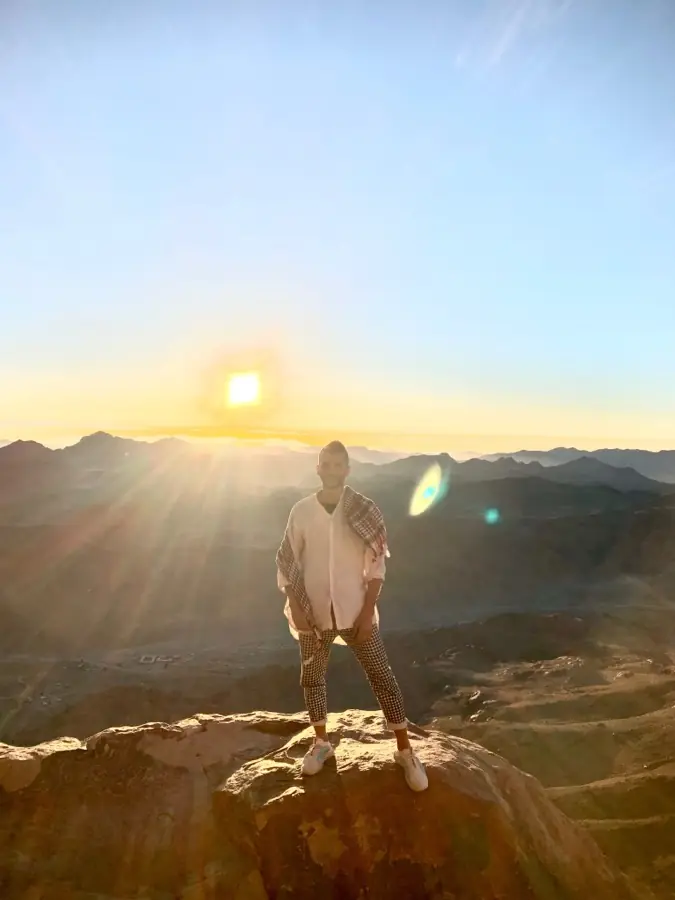
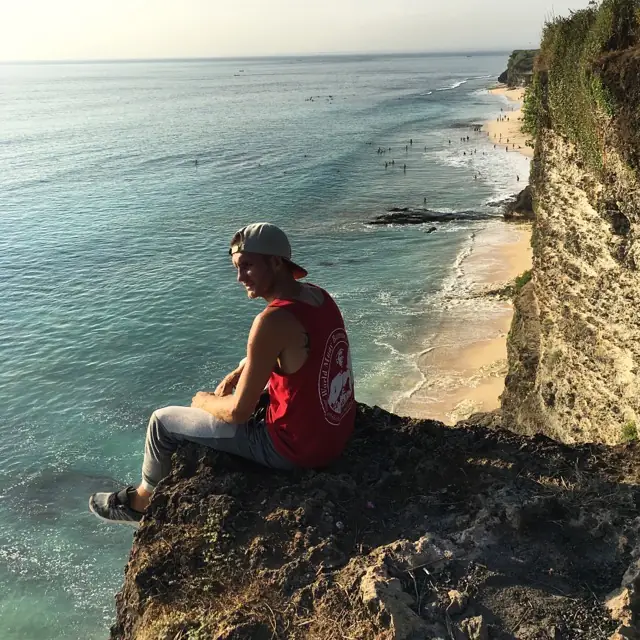
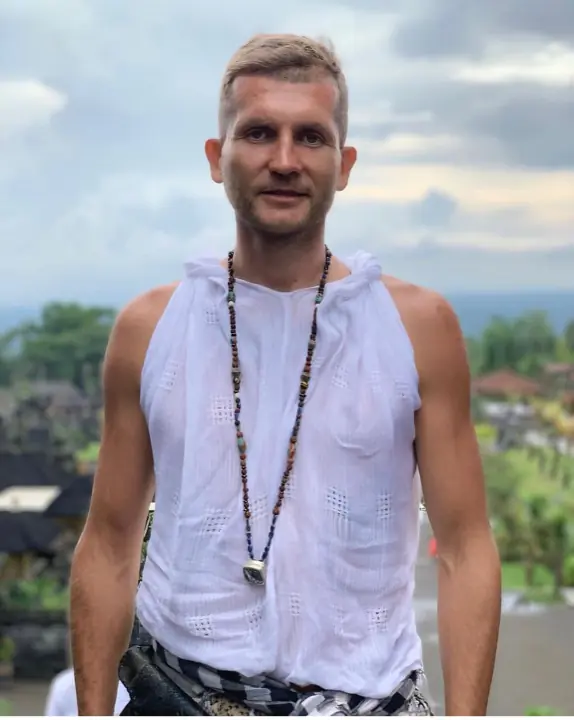
Three frames from the author’s road: the ridge, the cliff, the temple. These are photographs, not a drawing and not a generation.
The twenty-minute “Grid Hour” practice goes to an even 432 Hz tone. The tone switches on only when you press it and keeps sounding if you minimise the tab; after twenty minutes it falls silent by itself.
Here the whole structure of the programme is described: who a Keeper is, what they do, when the grid gathers, how an artist’s work is assigned to a node and how a study is tied to a point on the globe. The participation numbers will appear on this page when the server has calculated them — only what has been calculated stands on the platform.
The map on this page is a complete direction with its own methodology and its own registry of nodes. Next to it works an open programme of research of the Earth: it does not declare this model confirmed — it checks it, extends it and possibly revises it. The two worlds are connected by a link, not by mixing: they have different rules and a different reader.
A node of the grid is a place. The Mineral is what you come to it with. Eight levels, from €233 to €6,765.