The atlas of objects Start with an object you know. Giza stands here as a record with the coordinates 29.9792° N · 31.1342° E — and every figure in the catalogue rests on a source, not on a retelling. Structures, natural nodes and unidentified structures are in one catalogue, with the honest state of every record: what has been entered, what has not and how it is known.
The catalogue is open in full and without signing in. Place passports are filled in one at a time, source by source, and it is the platform’s participants who do it: entry into the project — ten short steps, with no form and no payment at the entrance.
About a familiar place you usually remember a retelling, not a source; about yourself, too — a habitual idea, not what can be seen right now. The atlas is an outer laboratory where every record rests on a source; the same skill — telling what is seen from what is retold — is needed in the inner one as well, where the instrument is attention. The question that connects the two — how the parts come together into a whole — is called on the platform coherence.
- 1. recognition
- 2. self-awareness
- 3. coherence
- 4. the nature of consciousness
- 5. unity
The atlas leads to the third.
The figures are read from the data files every time the page loads, not written in by hand: whatever is added to a place passport is visible in the count straight away.
The map of the state of the database is loading…
What the atlas has and what it does not have yet
A form for the record about a place
An object passport of seventeen sections, seven spectra, seven axes of data quality, a tree of functions, seven voices about the place and a node convergence index with weights fixed before the first analysis. The form is what cannot be glued on later.
The original array of names
The objects taken as the starting point of the research — “not as proof of a single theory but as an original array”. Every name stands here with a reference to where it was taken from.
Place passports
Every place has passport sections with a named source, a chronology and layers of history, a tree of functions and voices about the place. What nobody knows about the place is recorded in the passport itself as a separate section, not hidden.
The convergence index and the spectra
The eight factors of the index and the seven spectra of a place are assessed by a separate check — with weights fixed before the analysis. Until it exists, the index is not printed: a sum of what has not been assessed would look like a measurement without being one.
Coordinates, datings and sizes exist in a hundred retellings, and filling them in “from memory” is ten minutes’ work. But then the database would hold a figure that has no source, and it would no longer be possible to tell it from a verified one. An empty field is fixed by a source; a field filled with a guess cannot be fixed by anything.
They belong to the neighbouring direction — the crystal lattice. Each of its one hundred and fifty-six nodes has a chapter about the place and the stations of the route, and almost each has a road and a list of what is not yet known about the place. The “Planet” programme checks this model, and the passports can be read right now: all 156 nodes in a list →
Giza is not a line in a table
In the catalogue below, Giza stands as a record of the type “structure” with the coordinates 29.9792° N · 31.1342° E. A line in a table is one thing; here is the same place in a frame from the project archive.
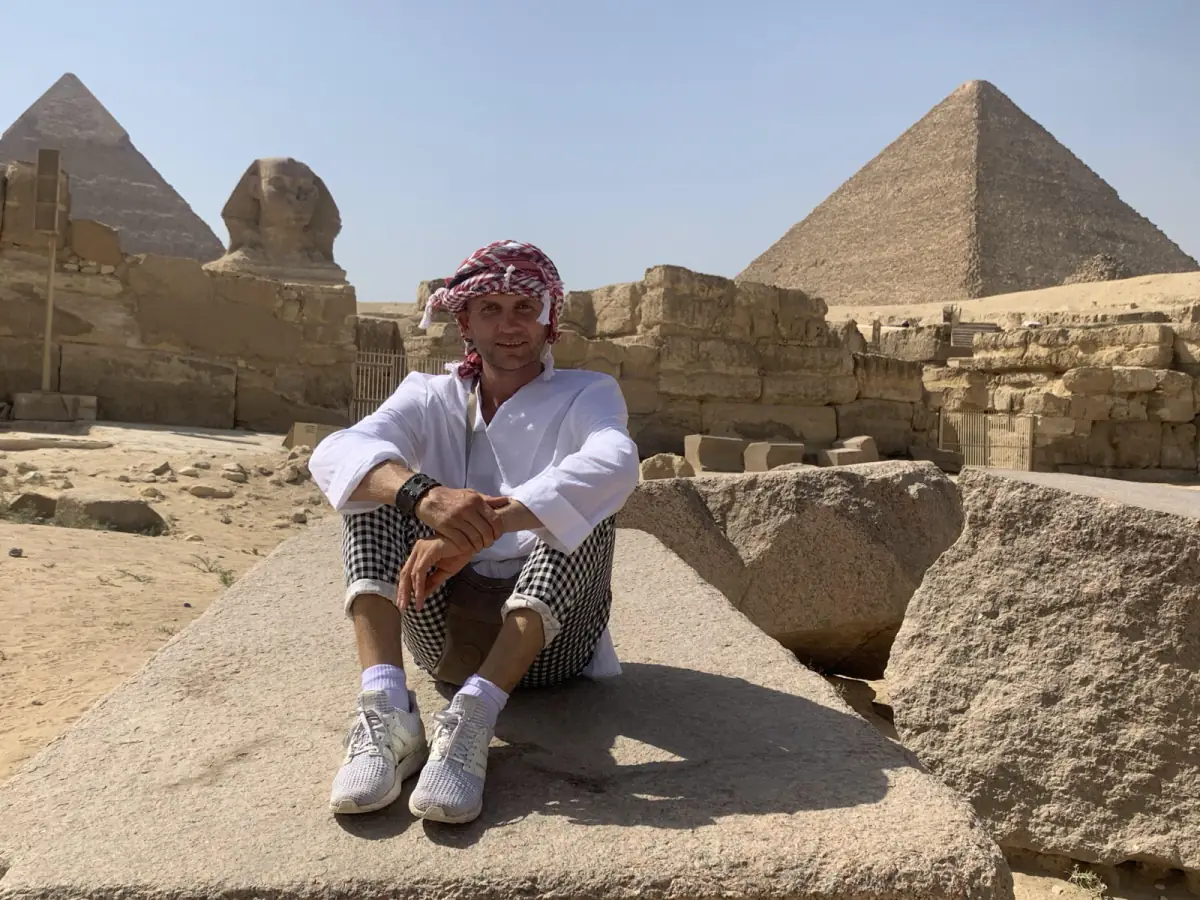
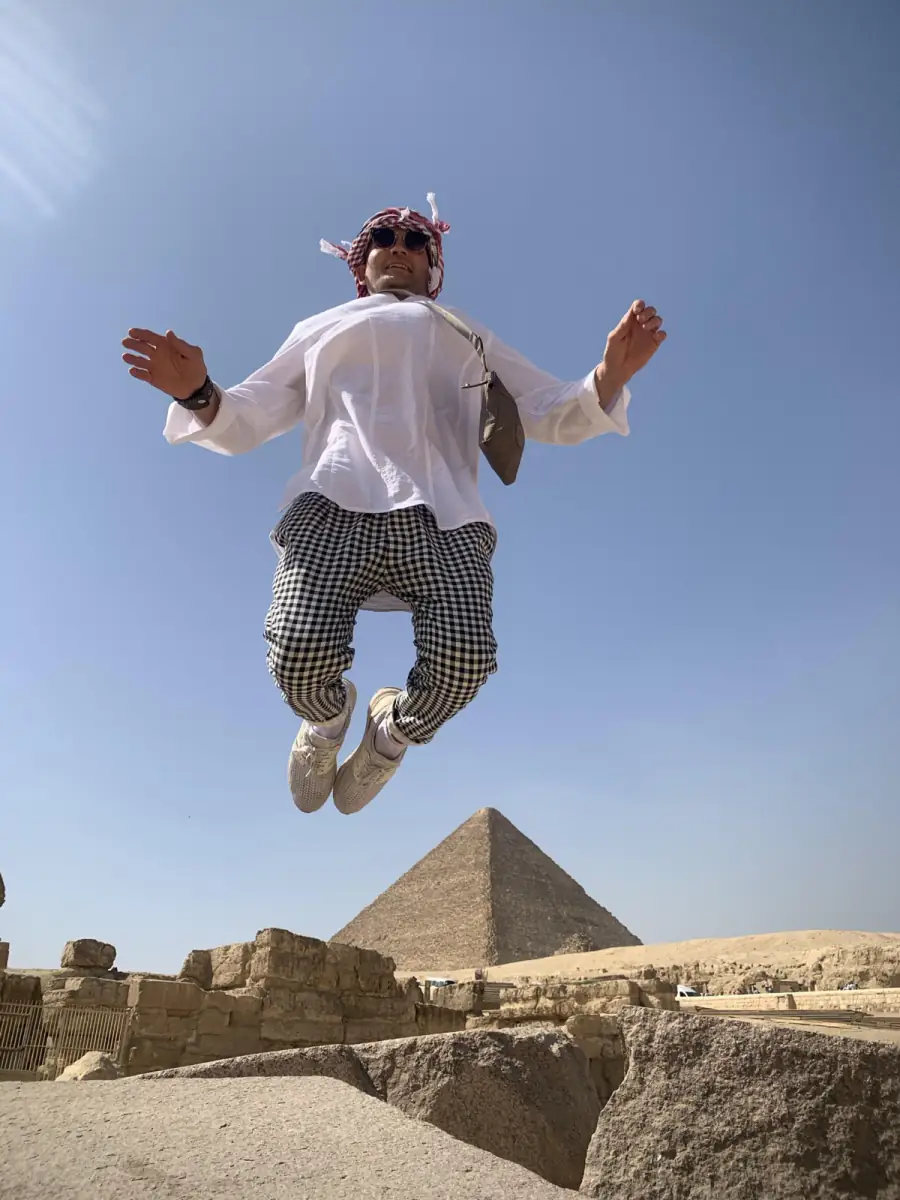
Both frames are photographs, not drawings and not generated images.
Objects of the programme
The filters work together: type of object, state of coordinates, state of the passport and a search by name or country. The table mode shows the same records row by row — this is that very “database mode” in which the set is convenient to browse and download.
The catalogue is loading…
There is not a single record in the database for these conditions. That is an answer, not an error: the atlas does not show what it does not contain.
The reliability level in the card refers to our record of the object, not to the object itself and not to its fame. “Unverified” for Giza does not mean that Giza is doubtful: it means that our database does not yet hold verified data about it.
Six levels of reliability — and a seventh label
One and the same scale stands on the object card, on a line, on a model and on a question. The level is set on the statement; the quality of the data themselves is shown separately — by the seven axes in the passport.
How an object gets into the atlas
Next in line for the original array are more regions: Iran, Iraq, Jordan, Africa, China, Mesoamerica. They will appear here as each record gets a source, not as a list of names: a list of names is a table of contents, not data.
Discovered → requires checking → confirmed → identified. An unidentified structure is not called an ancient structure before it is checked — neither in a caption nor in a heading.
Verified against a source · approximate · coordinates not entered. The third state is a working and honest one; such an object is not drawn on the map, because there is nothing to draw.
A link is not a source. An external address without a snapshot in the project materials is not entered in the registry: this rule was paid for by history, when a record held someone else’s website instead of a snapshot.
On the left are the wordings with which the section describes a lack of data. They replace the language of “they are hiding it from us”: the question of the availability of information is kept as a separate hypothesis, not implied in the caption of every empty field.
A comparative atlas: what repeats independently
Every seventh point on the planet “falls” into the grid. This is not a figure of speech but a measured number: 14.73 % of the Earth’s surface lies closer than one degree to the frame (a second way of counting gave 15.2 %). Hence the rule of the whole section: a coincidence in itself weighs nothing, and the table exists for the sake of a single question — which properties repeat independently of one another, that is, more often than chance produces them.
The wording of the result is fixed word for word and serves as the acceptance test of the section: not “the ancients used a single technology” but “this architectural feature has been found in N independent objects; an analysis of cultural connection and of the probability of random coincidence is needed”. That is why next to every coincidence in the grid the figure of the null model is printed — the same measure on which the work on the crystal lattice rests. One instrument, two subjects.
Measured by our own run over the grid with seed 20260814 and thirty-four control checks. The same instrument produced three negative results for Gornaya Shoria, and they sit in the model archive on a par with the positive ones. An instrument that can only confirm is not an instrument.
A feature is marked only with a source that can be opened. Marking terracing or an underground chamber “by general appearance” is an hour’s work, and then the comparison would contain a feature with no origin, and it would no longer be possible to tell it from a verified one. An empty cell is fixed by a source; a cell filled with a guess cannot be fixed by anything.
The comparison grid: fifteen features across all objects →
| the grid is being read from the data set… |
Fifteen features of the “genetics of structures” — one and the same grid of fields for every object: terracing, pyramidal form, dome, colonnade, underground chamber, central axis, orientation, circle, square, octagon, twelve-sided geometry, water circuit, inner space, corridors, resonance chambers. The question “why do these forms appear in different cultures” is asked and is not closed with an answer.
Technologies of the past: twenty topics and not a single claim without a path for checking
Tesla, the ether, wireless transmission of energy, megaliths, obelisks, underground chambers, vimanas, “free energy”, frequency concepts — topics around which there are more claims than checks. Here each enters in a single form: claim · source · what is known · what is assumed · how to check. No last line — no topic on the page.
the cards are being read from the data set…
The queue of topics for which no card has been written yet →
A topic in the queue is a name and a requirement for the format, not a draft of a text. Writing a card means finding the source of the claim and the path for checking it; until they exist, no plausible text is put on the page.
It is claims that are examined, not people: a researcher appears here as the source of a claim, not as the subject of examination. Everything concerning physiological protocols has been set aside as a separate question and is not published until it is decided.
Where the catalogue leads
Object passport
Seventeen sections, layers of history, a tree of functions, seven voices about the place and five levels from culture to human experience. The example is the first record of the array.
QuestionsWhat can be checked
The open questions of the section with a path for checking: the hypothesis, the data needed, the analysis, the control and which outcome counts as non-confirmation.
The neighbouring worldThe crystal lattice
A separate fundamental direction with its own map of nodes. The geometry of the grid is not taken as a given here — it is placed under checking.
Where this leads
The atlas brings places into one form so that they can be compared. The next question is how you yourself come together into one whole
Every object here has one card: coordinates, a place passport, checked sources — and a figure that can be checked. By the same rule you can look at your day: what you notice, what of it repeats and where the parts begin to coincide. This is the next step — alignment.
The ladder of five steps is shown above; the atlas leads to the third.
Above alignment the path keeps the same rule — look by a single form — and the subject changes. First attention is gathered on one thing, as on one card of the atlas; then the focus turns onto attention itself, with which you look at places; then attention recognises itself as part of the shared unified field of consciousness and looks at places from there. What changes in the subject at this height is told by the direction “The common field of consciousness”.